
This 6-week course traces the rich history and theory of sound, from classical compositions to modern digital genres. Expert musicians and historians will cover topics as diverse as music theory, the evolution of instruments, the cultural impact of iconic genres, and today's dynamic auditory landscape. Sessions will be engaging and provide you with a deep understanding of the universal language of music. Suitable for all.
Be ready to tune in and hear the world of music in an entirely new light.
Dates:
The World of Music course will run for 6 weeks on the following days:
- Wednesday 10th June
- Wednesday 17th June
- Wednesday 24th June
- Wednesday 1st July
- Wednesday 8th July
- Wednesday 15th July
All sessions will run from 10:00 am - 12:00 pm and include a tea / coffee break.
About the experts
Claire Caldwell
Claire Caldwell is a music educator, choral director, and founder of Musicatalyst, an initiative dedicated to transforming lives through music. Formerly the Performing Arts Manager and Director of Choral Music at Dilworth School, Claire spent many years leading its vocal programme and shaping the internationally recognised choir Fortissimo. Under her direction, the choir became known for its powerful performances of works in Te Reo Māori, as well as innovative medleys in Pasifika languages—championing cultural storytelling through music on a global stage.
Passionate about helping individuals unlock their potential, Claire’s work focuses on embracing vulnerability as a pathway to growth—whether guiding non-singers to find their voice or supporting experienced performers to strengthen their craft. In addition to her education work, she has toured extensively with the multi-award-winning operatic trio Sol3 Mio as an accompanist and served as Musical Director for their concert DVD Ladies and Gentlemen – Sol3 Mio in Concert, bringing her expertise to audiences across New Zealand and beyond.
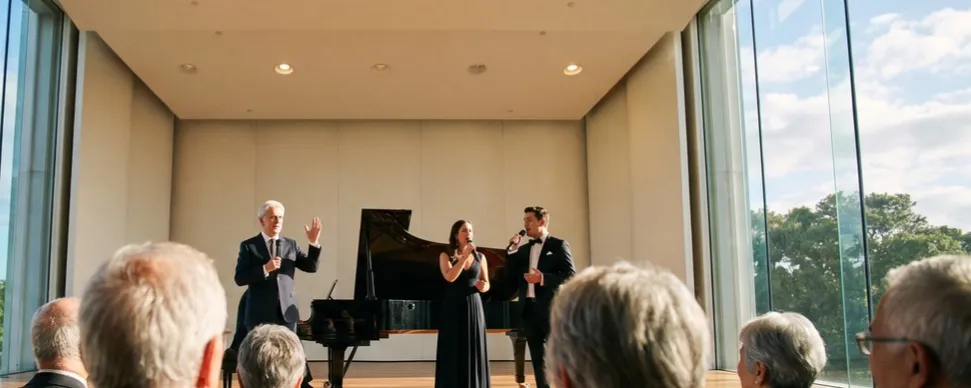
Session Abstract: Opera in Context: An Illustrated Exploration - This session presents an illustrated overview of the development of opera, interwoven with live vocal performances that bring key moments in its history to life. Led by Claire Caldwell and featuring university-level singers, the session examines the evolution of operatic style, repertoire, and performance practice. Accessible and engaging, the presentation offers audiences an opportunity to deepen their understanding of opera through both performance and commentary, with optional moments of interaction to enhance the experience.
Kingsley Spargo
Kingsley Spargo is an Auckland-based sound artist, composer, and educator whose work spans contemporary music, improvisation, theatre, and interdisciplinary performance. A Professional Teaching Fellow and PhD candidate at the University of Auckland’s School of Music, Kingsley’s practice explores the expressive possibilities of sound through collaboration, experimentation, and narrative-driven composition. He is also a curator and creative facilitator, contributing to exhibitions and performances through the Kim Meredith Gallery, where he works closely with artists to develop innovative, cross-disciplinary work.
With a career that bridges academia and the creative industries, Kingsley has performed and collaborated with a wide range of leading New Zealand artists and contributed to film, gallery, and live performance contexts. Known for his distinctive, exploratory approach to sound, he brings a deep commitment to creative inquiry, artistic community-building, and mentoring emerging practitioners. His work reflects a passion for pushing boundaries and fostering meaningful connections between people, place, and sonic experience.
Session Abstract: Listening Beyond the Score: Sound Design as Music - This session is by composer and sound designer Kingsley Spargo that repositions sound design as a musical medium in its own right — expressive, political, cultural, and evocative. Drawing on film, theatre, and experimental practice, with examples from his own work including the recent play Woman Far Walking and theatre and film versions of The Haka Party Incident, Kingsley invites audiences into a deeper way of listening that moves beyond melody and harmony toward atmosphere, and cultural resonance. The lecture traces the evolution of sound design alongside — and often in tension with — Western ideas of music, asking when sound becomes music, who is recognised as a composer, and how political, Indigenous, and site‑specific contexts shape sound practice.
Godfrey De Grut
Godfrey De Grut is an award-winning New Zealand musician, composer, and educator with a distinguished career spanning performance, songwriting, and music education. He is best known as a keyboardist and arranger, and as a co-winner of the prestigious APRA Silver Scroll for the song Misty Frequencies. Over the course of his career, he has performed and toured internationally, collaborated with leading artists, and contributed to a wide range of musical projects across genres.
Alongside his work as a performer, Godfrey is a Professional Teaching Fellow in popular music at the University of Auckland, where he mentors emerging musicians and shares his deep industry experience with the next generation. An accomplished songwriter and educator, he brings a unique blend of real-world insight and creative expertise to his speaking engagements, inspiring audiences with perspectives on music, creativity, and the evolving landscape of the industry.
Session Abstract: Invisible Complexity: How Modern Popular Music Rewrites the Rules of Musical Sophistication - Modern popular music is often perceived as simpler than historical forms, but this is a category error: its complexity has shifted domains—from harmony and notation into production, timbre, microtiming, form, genre hybridisation and listener cognition. We'll examine some concepts and techniques that enhance listener engagement in modern music and investigate some of the new tools of musical sophistication.
Basant Madhur
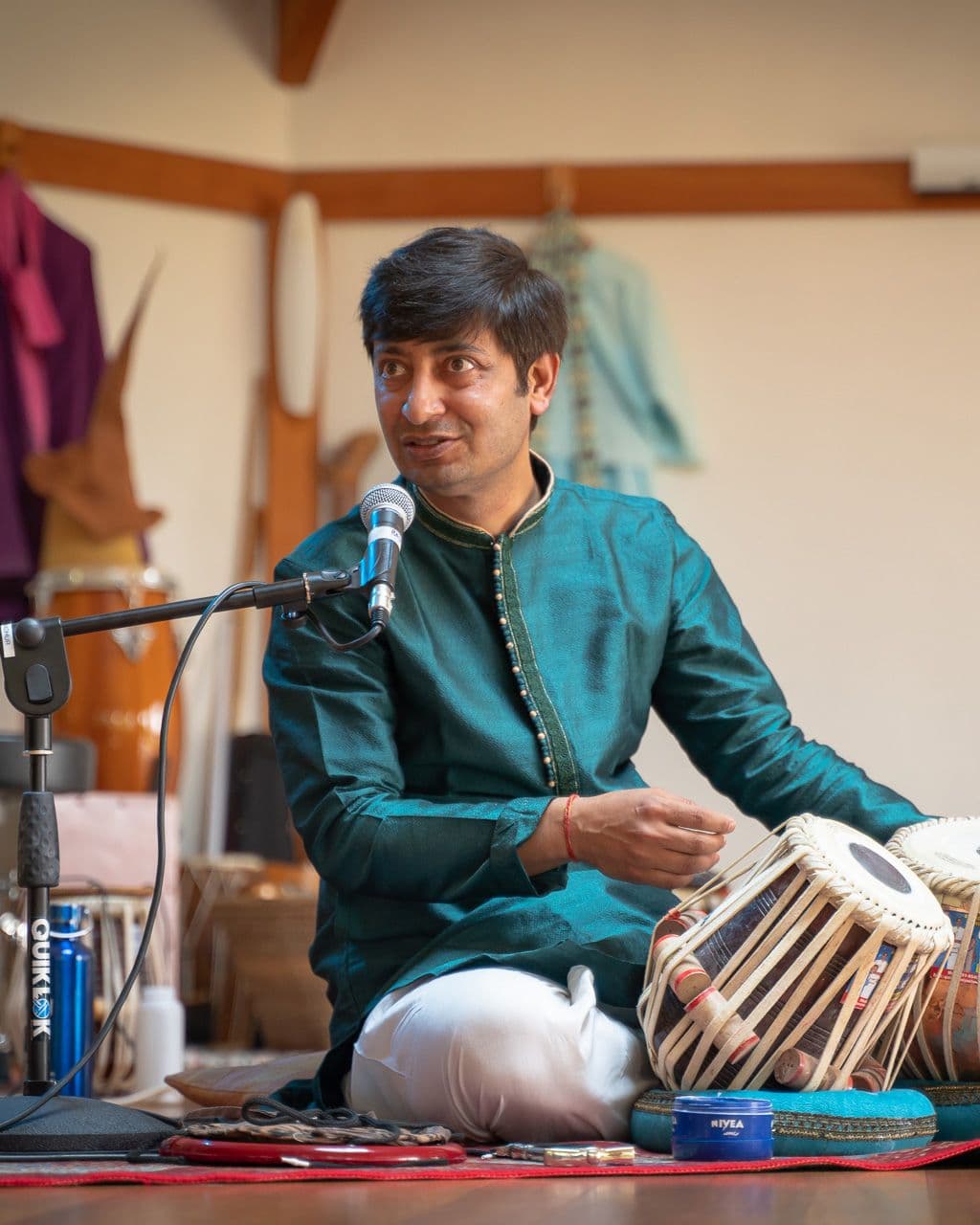
Basant Madhur is a distinguished tabla player, composer, and music educator, born into a family of musicians and trained under his elder brother Deepak Madhur and renowned Punjab Gharana maestro Late Pt. Pawan Kumar Verma. Known for his expressive playing and musical versatility, he is regarded as one of the most respected Indian classical artists in New Zealand and across Australasia.
Since relocating to New Zealand in 2002, Basant founded the Sargam School of Indian Music, training over 500 students and nurturing the next generation of musicians. He has performed internationally alongside leading maestros such as Pt. Vishwa Mohan Bhatt, Pt. Ronu Majumdar, Dr. Kadri Gopalnath, and Patri Satish Kumar, and collaborated widely in fusion projects including India Meets Ireland, Shades of Shakti, and West Meets East with The Global Strings. His performances span India, New Zealand, Australia, Fiji, and the USA, and he is recognised for his engaging stage presence and ability to connect deeply with audiences through rhythm and creativity.
Session Abstract: Tabla Traditions & Global Fusion - A celebrated tabla maestro and composer, Basant Madhur bridges the depth of Indian classical rhythm with contemporary and cross-cultural music. Based in New Zealand, he is widely recognised for his dynamic performances, global collaborations, and contribution to music education. His work reflects both deep-rooted tradition and an expansive creative vision that connects cultures through rhythm.

Coming soon
New speakers coming soon
Other learning activities you may be interested in
Society & Us 6-week Course
Society & Us
Creative Arts 6-week Course
Creative Arts
Technological Impact 6-week Course
Technological Impact
Scientific Advances 6-week Course
Scientific Advances
History 6-week Course
History
Technological Impact 6-week Course
Technological Impact
Sports 6-week Course
Sports
Technological Impact - Workshop (Evolution of the Internet and Digitisation)
Technological Impact POPULAR
Technological Impact 6-week course
Technological Impact
Robotics, Internet of Things and Artificial Intelligence Workshop
Technological Impact POPULAR
History 6-week course
History